Last updated November 21, 2026
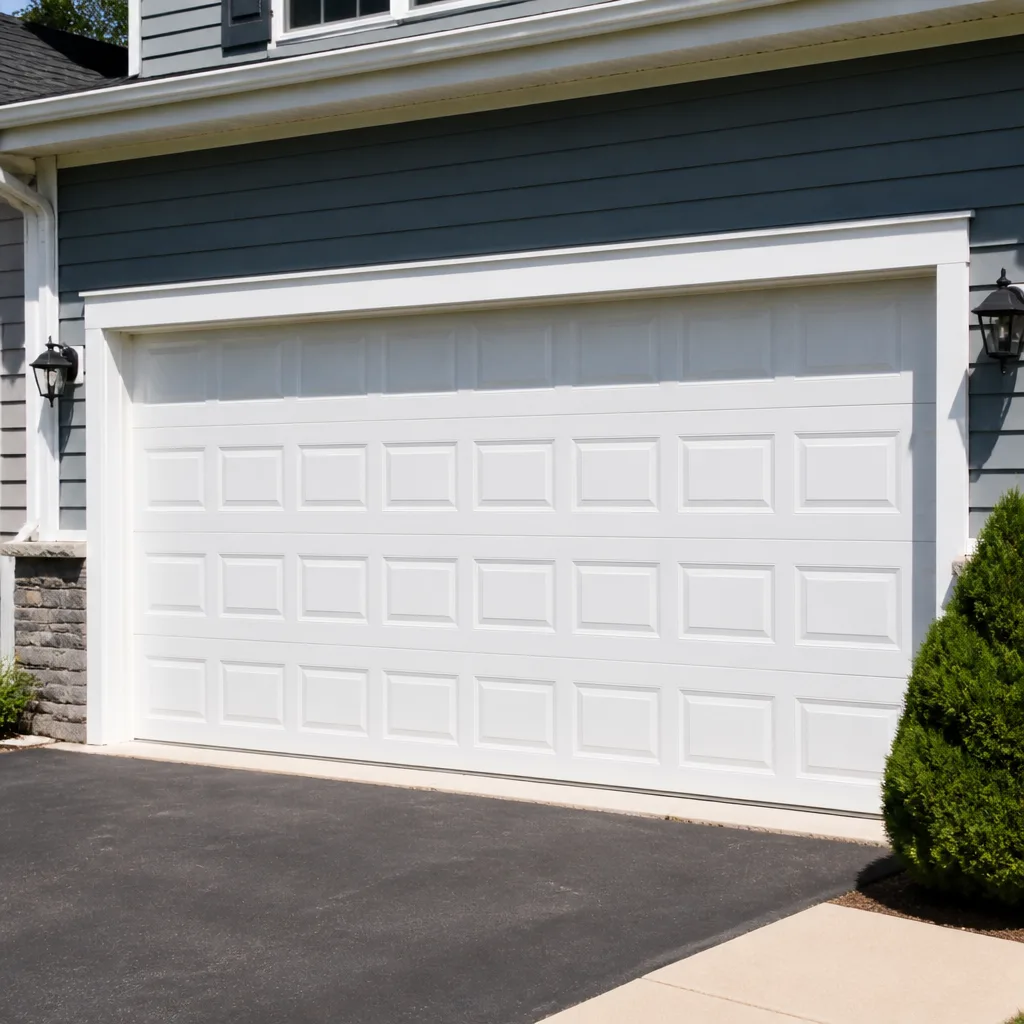 Raised-panel steel
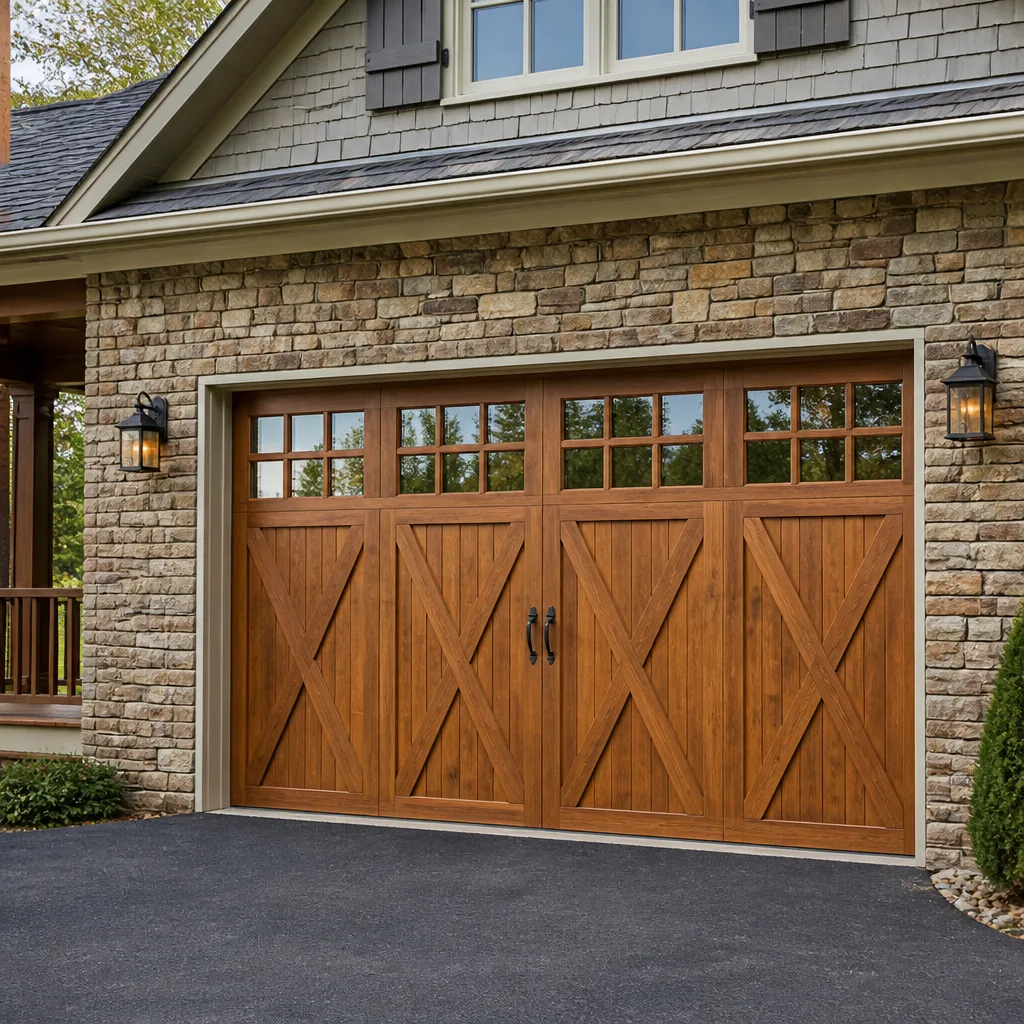 Carriage house
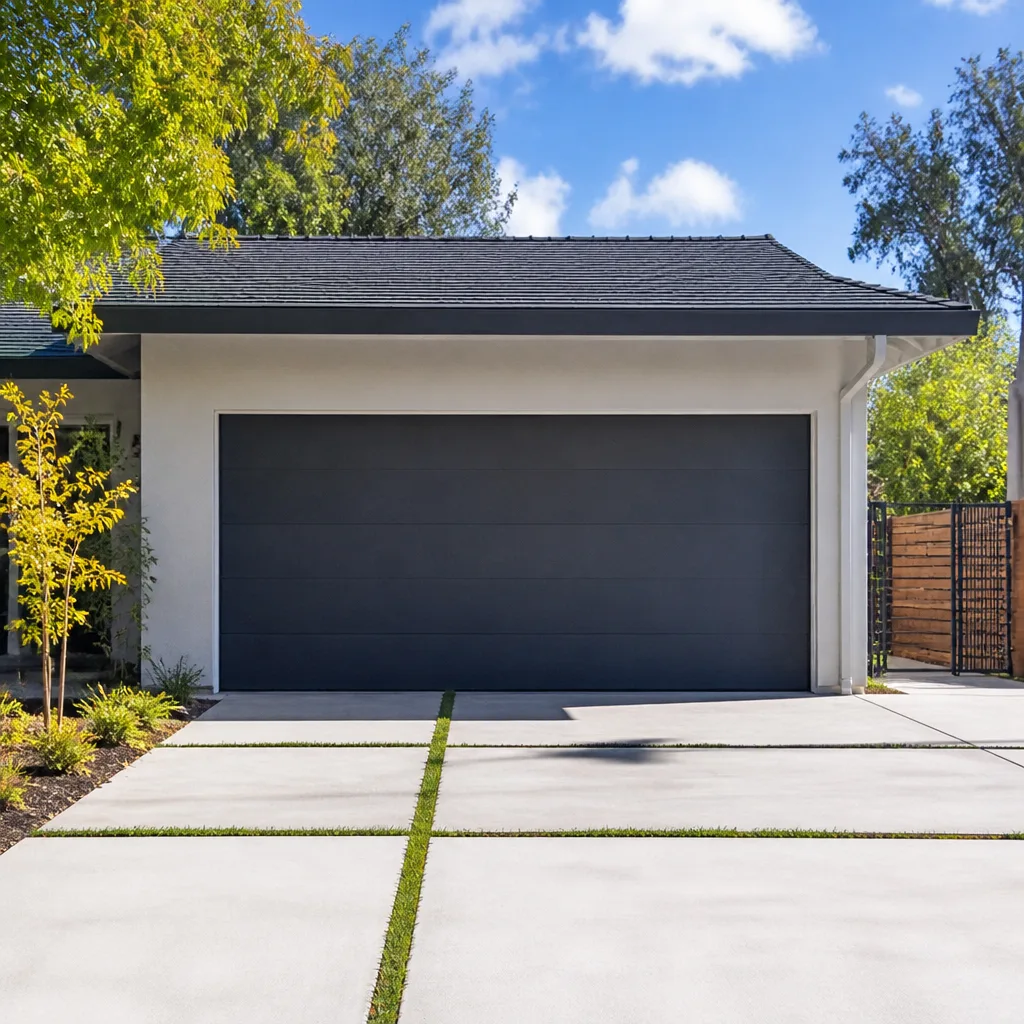 Modern flush
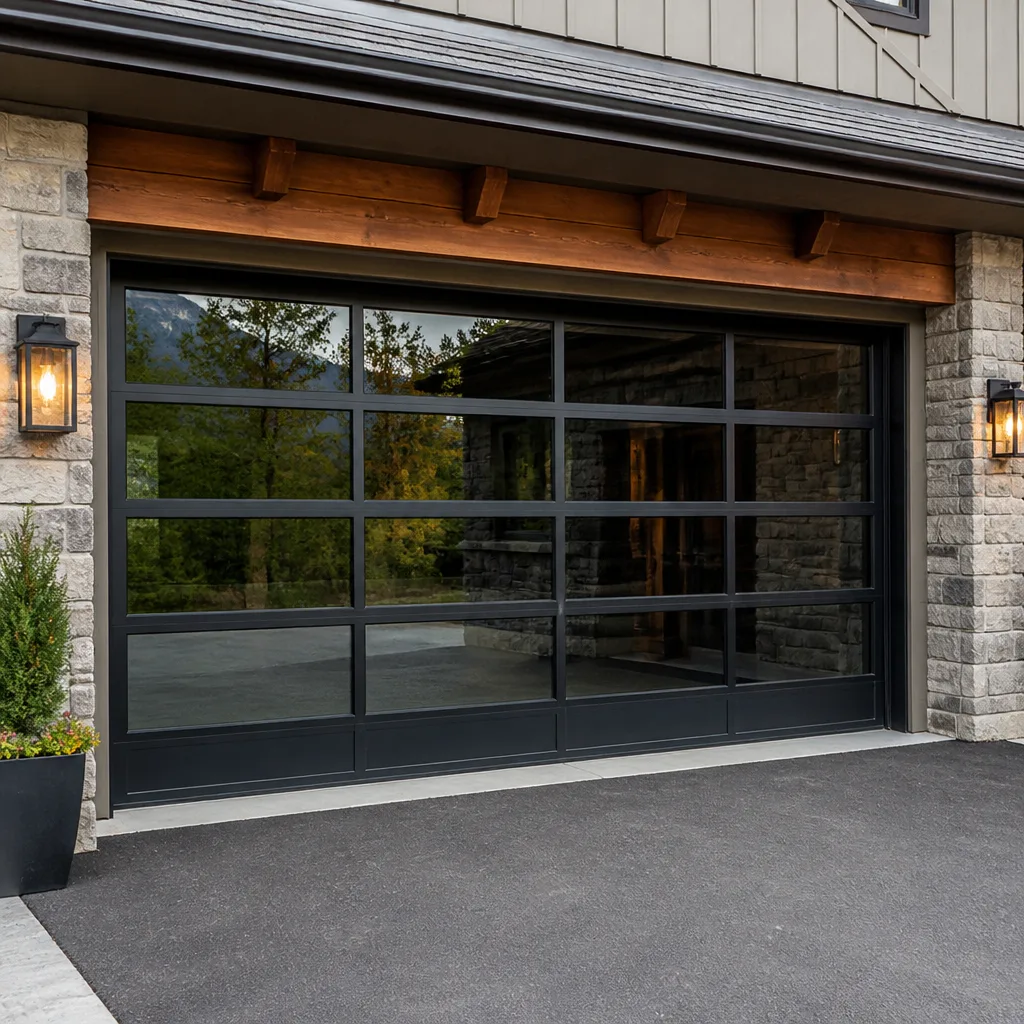 Full-view glass
 LiftMaster openers
 Chamberlain openers
Full 25-point door and opener safety check with every visit - springs, cables, rollers, tracks, and your LiftMaster or Chamberlain opener included
You get a price before we start. It does not change when the pro arrives.
Get your free estimateGarage Door Permits, Codes & Inspections in Federal Way, WA: What You Need to Know
Here’s the part of garage door work almost nobody explains before the crew shows up: the permit question depends entirely on what’s being changed. Swapping a damaged panel is permit-free. Replacing the entire door on an attached garage is a different story under Washington State code, and it’s a distinction that catches Federal Way homeowners off guard. A door that gets replaced without the proper permit can sit unnoticed for years, then surface during a buyer’s inspection and turn into a closing problem nobody planned for. This guide walks through when a permit is actually required, what the state energy code asks of doors attached to living space, how to check whether a contractor pulled one, and how to fix things if a previous job skipped the step.
Quick Answer
In Federal Way, replacing a full garage door on an attached garage generally requires a building permit because the door is part of the building envelope and must meet Washington State energy code requirements for insulation. Swapping individual panels, replacing a torsion or extension spring, and replacing a garage door opener are repair or maintenance jobs that typically don’t require a permit. When in doubt, call the City of Federal Way’s building department before work begins, and confirm in writing that any contractor you hire will pull the permit themselves.
Styles & brands we work with
- Raised-panel steel
- Carriage house
- Modern flush
- Full-view glass
- LiftMaster openers
- Chamberlain openers
Table of Contents
- When does garage door work need a permit in Federal Way?
- What does Washington’s energy code require for an attached garage door?
- The fire-rated door between your garage and living space
- How to verify a contractor actually pulled the permit
- What happens during a garage door inspection
- What happens at resale if the work was never permitted
- How to resolve unpermitted garage door work after the fact
- What permits and inspections typically cost
When does garage door work need a permit in Federal Way?
A full garage door replacement on an attached garage generally requires a building permit in Federal Way. Panel swaps, spring replacements, opener replacements, and routine repairs generally do not. The dividing line isn’t how much the job costs or how long it takes. It’s whether the work changes the building envelope or the door assembly that separates the garage from the rest of the house.
Here’s how the split usually breaks down:
- Full door replacement, attached garage: permit generally required, because the door is treated as part of the exterior envelope and must satisfy insulation and safety requirements.
- Full door replacement, detached garage: permit requirements vary, so confirm with the city. A detached, unconditioned garage often falls into a lighter review category, but “often” isn’t “always.”
- Panel replacement on an existing door: typically no permit. You’re restoring the same door, not changing the assembly.
- Spring replacement (torsion or extension): no permit. This is a maintenance and repair operation.
- Opener replacement or repair: no permit. Openers are appliances, not structural elements.
- Track, roller, cable, and hinge replacement: no permit, assuming the door itself and its opening stay the same.
- Changing the size of the door opening or reframing the header: permit required. Now you’re into structural work, not door work.
Federal Way sits in King County, and permitting runs through the city rather than the county for most residential work inside city limits. If a project is big enough to alter framing or the opening, expect plan review and possibly a structural component to the application. Most straightforward door replacements don’t need plan review, but they do need the permit and inspection.
The practical takeaway: if the whole door assembly is coming out and a new one is going in on a garage attached to the house, assume a permit is part of the project and ask your contractor to confirm it before any materials get ordered.
What does Washington’s energy code require for an attached garage door?
Washington State’s energy code treats the wall between a conditioned house and an unconditioned garage as part of the building envelope, and the garage door in that wall is a component of it. That means when you replace the full door on an attached garage, the new door needs to meet the insulation requirement the code sets for that assembly. This is the piece most homeowners miss entirely. They compare door styles and colors, then learn at permit time that the door they picked doesn’t meet the insulation threshold.
What that means in practice:
- The insulation value of the door is expressed as an R-value, and the code sets a minimum for doors in this application.
- Not every door sold at retail meets it. Basic single-layer steel doors frequently don’t. Insulated doors with a polyurethane or polystyrene core usually do.
- Your contractor should be able to point you to the manufacturer’s published R-value for the specific model, not a marketing phrase like “insulated.”
- A door that meets code in a milder climate state might not be the right spec in Federal Way, where winters are cool and wet and the garage often shares a wall with bedrooms or a kitchen.
- Detached, unconditioned garages fall outside much of this requirement because there’s no conditioned space on the other side of the wall. That’s why the attached-versus-detached distinction matters so much.
Federal Way neighborhoods vary a lot in housing stock. Older homes in the Camelot and Mirror Lake areas often have single-car doors and uninsulated garages, while newer construction around Redondo and along South 320th tends toward larger double doors already built to a modern spec. If you’re replacing a door on an older attached garage, it’s worth confirming the new door’s R-value before you fall in love with how it looks. The permit inspector will care about the number more than the color.
If you’re weighing whether a repair buys you more time versus moving straight to replacement, our garage door repair page covers how we evaluate that trade-off.
The fire-rated door between your garage and living space
There’s a second door in most attached garages that carries its own code requirement, and it’s not the overhead door. It’s the pedestrian door connecting the garage to the house. Washington State residential code requires that door to provide fire separation between the garage and the living space, and it also has to be self-closing.
What “solid core” actually means here:
- The door needs to be solid wood or a solid-core assembly, or a rated door that provides an equivalent fire separation. A hollow-core interior door is not acceptable in this location.
- The door must self-close and self-latch. That means a spring hinge or a self-closing mechanism, not a door propped open with a brick.
- The separation also extends to the wall and ceiling between the garage and the house, and penetrations in that wall need to be protected. Ducts and other openings get sealed to preserve the separation.
- If you’re replacing the garage-to-house door as part of a remodel, the replacement needs to meet the same standard. A standard interior slab isn’t the right product for that opening.
- If a prior homeowner removed the self-closer or hung a hollow door to save money, that’s a real code deficiency, and it’s one a home inspector will likely flag.
We get asked about this door often when homeowners are dealing with a Federal Way garage door that won’t seal properly and the adjacent house door is part of the same project. The two are separate code items, but they come up together in inspections because both affect how the garage connects to the living space. If you’re not certain what’s required for your specific layout, the City of Federal Way building department is the authority to ask. Code language is specific, and interpretations can vary by project scope.
One point of caution: don’t treat the garage-to-house door as a cosmetic upgrade. If your current door is hollow, doesn’t self-close, or has been altered, correcting it is a fire-safety matter, not a design preference.
How to verify a contractor actually pulled the permit
This is where trust gets tested, and it’s also where you have real leverage. A contractor who tells you they “handle the permit” is making a claim you can check. Federal Way’s permitting runs through the city’s online permit portal, and a permit search is available to the public. You don’t need anyone’s permission to look.
Here’s a workable process:
- Ask before signing. Get a clear answer, in writing, on whether a permit is required for your job and who is pulling it. If the answer is “you don’t need one,” ask them to explain why the work falls outside the permit requirement.
- Ask for the permit number once the application is filed. A legitimate contractor will have it and won’t hesitate to share it. The number gets posted on the job site in many jurisdictions.
- Look it up yourself. Federal Way’s online permit search lets you search by address, permit number, or contractor name. Confirm the permit exists, that it matches your address, and that the scope described matches the work being done.
- Check the contractor’s license status. Washington’s Department of Labor & Industries maintains a public contractor registration lookup. Verify the registration is active and that the contractor is registered to do the type of work being performed.
- Confirm the inspection got scheduled. A permit that’s pulled but never inspected doesn’t close out. Ask when the inspection is booked, and confirm afterward that it passed.
- Keep the paperwork. Store the permit number, the inspection record, and the final signed-off documentation with your home records. This matters at resale.
Three things make a permit search hard to fake: the address has to match, the scope has to match, and a passed inspection has to show up. If any of those are missing, the permit wasn’t actually completed, even if one was pulled. “Pending” and “passed” are not the same thing.
We’ve been asked why this matters for something as routine as a door swap. The answer is that at sale time, an inspector pulls the permit history for the property, and the door replacement shows up as recent work. If there’s no corresponding permit, it becomes a question, and questions cost time.
What happens during a garage door inspection
A garage door inspection tied to a permit is usually quick and straightforward. The inspector confirms that what was installed matches what was permitted, that the door meets the code requirements for the application, and that the safety features are functioning. It’s not a deep mechanical teardown.
What inspectors typically check:
- The installed door model and insulation value match the submitted documents
- Mounting, attachment, and structural connections look correct
- The door opens and closes fully without binding, and stays open at the halfway point when released
- The automatic reverse function works as intended
- The photo-eye safety sensors are installed at the correct height, aligned, and reverse the door when obstructed
- If the door is on an attached garage, the fire separation between garage and living space is intact, including any pedestrian door
- Electrical connections for the opener are properly made and covered
Most inspections for a standard residential door replacement take a short visit. If something’s off, the inspector issues a correction notice and you schedule a re-inspection after it’s fixed. Re-inspections add time and sometimes a small fee, which is another good reason to get the details right the first time.
If you’re troubleshooting a door that’s failing the safety-reverse check, our guide to garage door opener repair covers the sensor and drive problems we see most often.
What happens at resale if the work was never permitted
Unpermitted garage door work doesn’t usually stop a sale outright, but it does create friction. A buyer’s home inspector notes the recent replacement on the report, the buyer’s agent pulls the permit history, and there’s no record. That triggers a request for documentation the seller usually can’t produce. In a competitive market, buyers may accept the explanation. In a slower market, or with an anxious buyer, it becomes a negotiation lever or a reason to walk.
The common outcomes:
- Buyer asks for the permit to be retroactively obtained before closing. This is fixable, but it takes time and may require opening the wall or door assembly for inspection.
- Buyer asks for a credit. Less common, but it happens when the unpermitted scope is unclear.
- Sale proceeds with a disclosure. If the work is clearly safe and the only gap is the paperwork, some buyers accept it with a disclosure in the sale documents. This usually requires a title or escrow note.
- Lender complications. If your loan product has requirements about unpermitted work, the lender may ask for resolution before closing.
- Insurance review. Homeowners insurance policies vary on unpermitted work. It’s worth checking with your carrier if you’re ever in this spot.
The dollar cost of the permit itself is small compared with the hassle of resolving the gap under a closing deadline. That’s the whole point of pulling it upfront. The permit is a record, and the record is what protects you down the line.
One thing we tell Federal Way homeowners: if you’re planning to sell in the next couple of years, treat the permit as part of the replacement budget from the start. It’s cheap insurance against a problem you can see coming.
How to resolve unpermitted garage door work after the fact
If you’re already in the position of having unpermitted door work on your Federal Way home, you can usually resolve it. It just takes more steps than doing it right the first time, and it may require some opening up of the installation for the inspector to see the connection details.
The general path:
- Contact the City of Federal Way building department. Explain the situation, provide the installation date if you know it, and ask what they need to bring the work into compliance. Some jurisdictions treat certain repairs as retroactive permits, others require a full new permit application.
- Gather documentation. Manufacturer spec sheets for the installed door, proof of insulation value, and any receipts or contracts from the original installation will all help.
- Expect an inspection. The inspector will want to verify the door meets the code requirements for the application, which may mean seeing the wall connections or confirming insulation specs from the manufacturer’s published data.
- Correct any deficiencies. If the door doesn’t meet the energy code requirement for an attached garage, you may need to replace it with a compliant model. If the fire separation between garage and living space is compromised, that gets corrected too.
- Complete the final inspection and keep the record. Once it’s signed off, the permit is on file at the city, and the problem is resolved for any future sale.
Spring work in Federal Way is a separate question entirely, and a dangerous one. Torsion springs and the cables attached to them are under high tension and can cause serious injury if handled without the right tools and training. Our garage door spring repair page covers how we handle those jobs safely. No homeowner should attempt a spring repair as a DIY project, and no permit applies to that work. Springs are repair and maintenance, not construction.
What permits and inspections typically cost
Permit fees for residential garage door replacement in Federal Way are typically modest compared with the cost of the door itself, and inspection fees are usually small or bundled into the permit. Exact numbers vary with the city’s current fee schedule, so we won’t quote a firm figure. What we can tell you is the order of magnitude.
What you’re typically looking at:
- Building permit: usually a small residential fee, in the range of what a homeowner would spend on a service call, not a major project line item.
- Inspection fee: often bundled with the permit, sometimes a separate small charge.
- Re-inspection fee: only applies if the first inspection fails and requires a second visit.
- Contractor admin time: some contractors charge a small amount for permit handling. That’s normal.
- If you handle the paperwork yourself: possible for a homeowner-permitted project, but many homeowners prefer to have the installing contractor handle it to keep the process clean.
None of this is a surprise line item on a well-run project. A contractor who quotes you a full door replacement should be able to tell you what the permit cost is, or at least confirm that pulling it is included in the quoted price. If a quote says “permit not included,” ask what it typically adds. It’s a reasonable question and any experienced contractor will have an answer.
For pricing on the door itself and installation, start with our Federal Way Garage Door Repair Pros homepage for an overview of the service lines and how we work with homeowners in the city.
Common Mistakes to Avoid
- Assuming a full door replacement needs no permit because the old one was “the same size.” The permit isn’t about size, it’s about the envelope. An attached garage door replacement triggers the permit regardless of whether the opening changed.
- Buying a door before checking the R-value requirement. Federal Way homes with attached garages typically need an insulated door that meets the state energy code minimum. Ordering a basic single-layer door first and asking about code second is a fast way to add a re-order to your project.
- Taking a contractor’s word for it without checking the permit number. Federal Way’s online permit search is public. If a permit is pulled, the number is available. If it’s not, that’s the answer you needed.
- Letting the fire-rated door between garage and living space get swapped for a hollow one. A hollow-core interior door in that location doesn’t meet the fire separation requirement, and it’s a common shortcut on older Federal Way homes we see during inspections.
- Pulling the permit but forgetting to schedule the final inspection. An open permit that was never inspected doesn’t close out. At resale, it looks the same as an unpermitted job.
- Removing the self-closer from the garage-to-house door to make it easier to walk through with groceries. It’s a real convenience problem, but the self-closer is a code requirement and it needs to stay.
- Hiring a general handyman for a full door replacement. This is work on a system that includes high-tension springs, a structural opening, and an energy code requirement. Not every generalist is set up for that combination.
See the difference
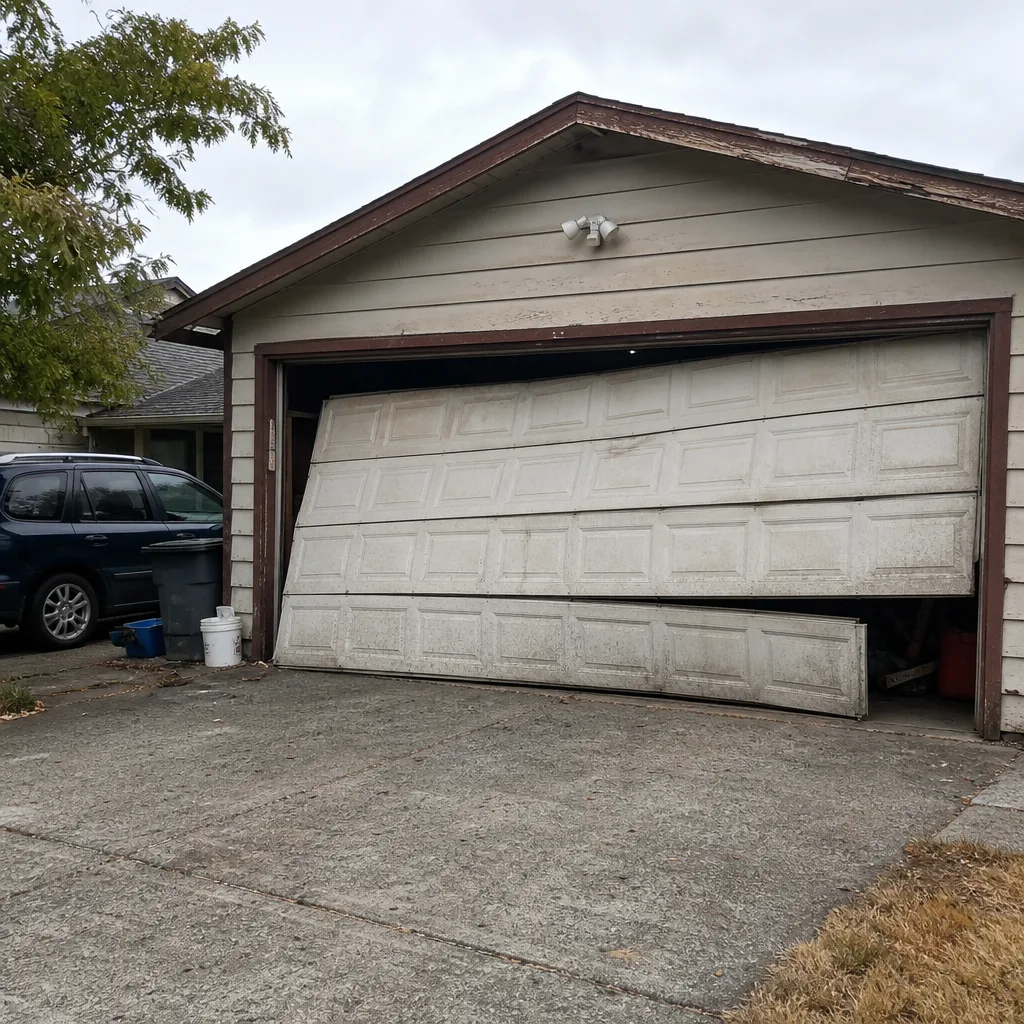 Before
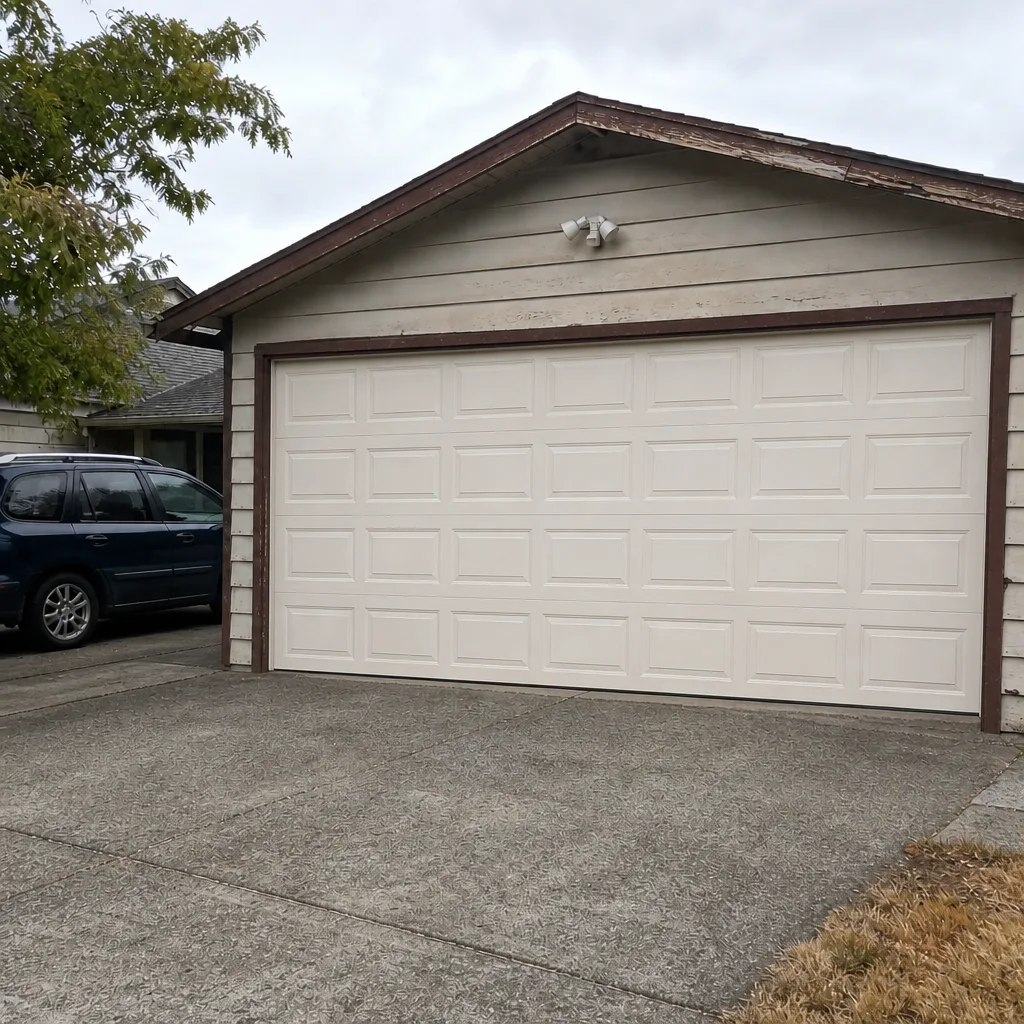 After
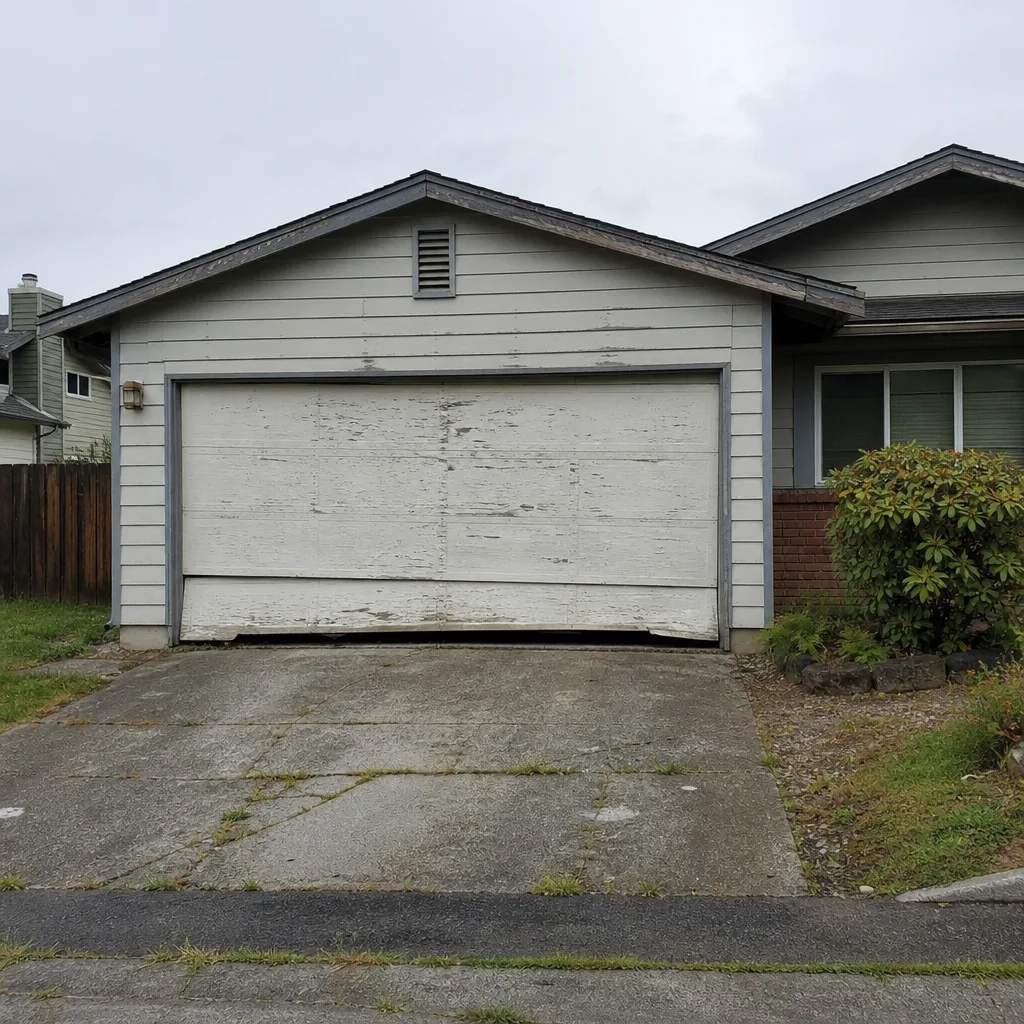 Before
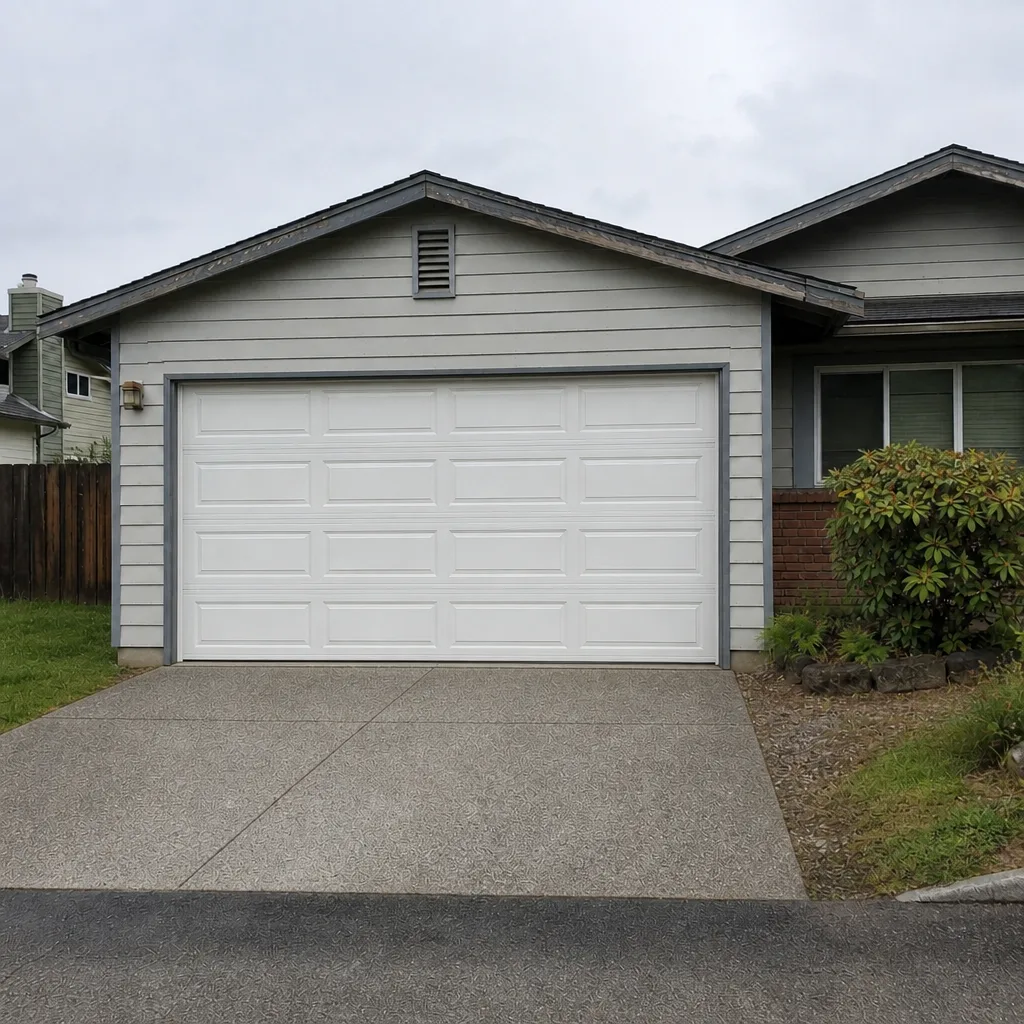 After
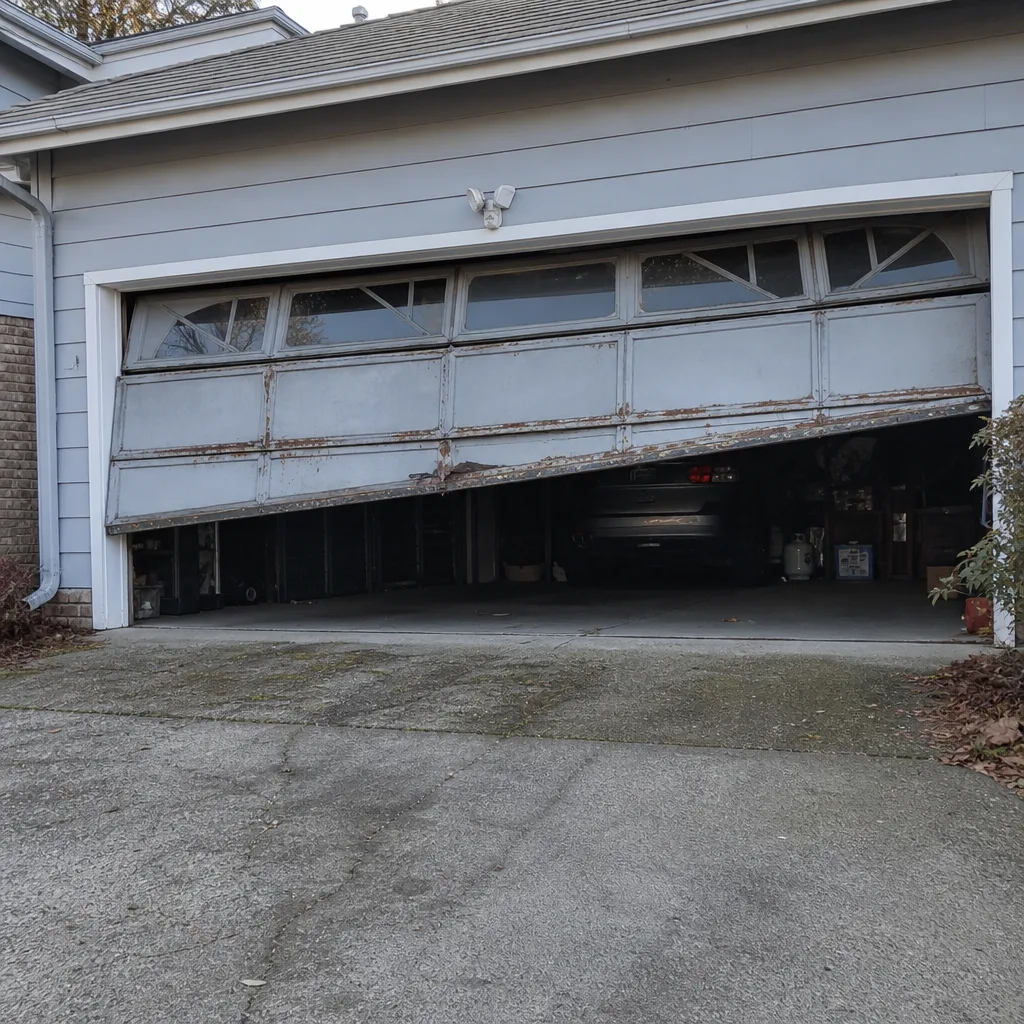 Before
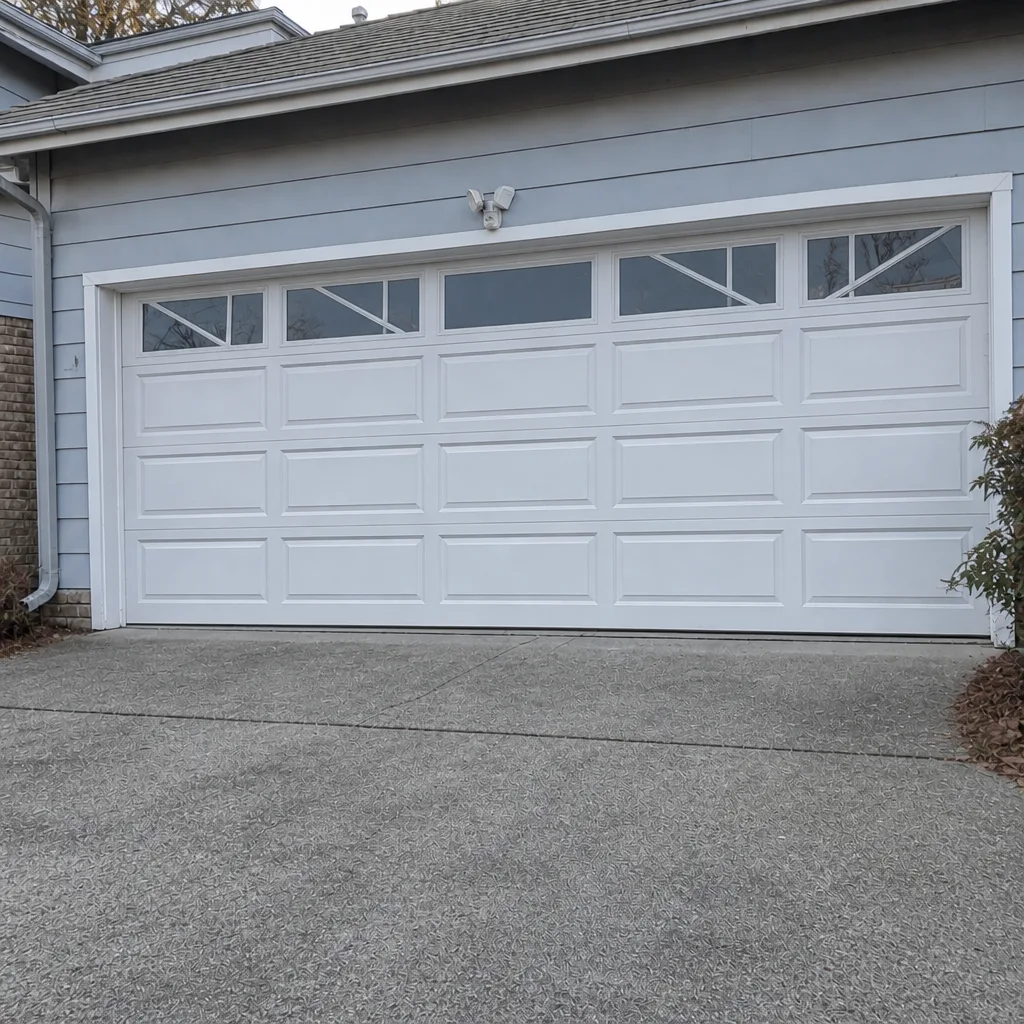 After
When to Call a Professional
Call a professional for any work that involves the springs or cables on your door, for a full door replacement where the permit and energy code come into play, and for any job where the door is binding, coming off its track, or failing its safety reverse check. Spring work in particular is not a homeowner project. The stored tension in a torsion spring can release without warning, and the injuries are serious. Opener problems, sensor alignment, and remote or keypad issues are also worth a professional look when they don’t clear up with the basics, because opener electronics and drive systems require brand-specific familiarity. Our technicians have up to 14 years of experience and work on systems from Raynor, LiftMaster, Chamberlain, Genie, and other major brands, so we can identify the model and its behavior quickly. Federal Way Garage Door Repair Pros offers free estimates in Federal Way. Call (866) 937-7597 and we’ll walk through your situation and give you a written price before any work begins.
Frequently Asked Questions
Yes, in most cases, if the garage is attached to the house. A full door replacement on an attached garage generally requires a building permit through the City of Federal Way because the door is part of the building envelope and must meet Washington State energy code requirements. Panel replacement, spring replacement, and opener work typically do not require a permit. Call (866) 937-7597 for an estimate and we’ll confirm the scope for your specific home before you commit.
No. Replacing or repairing a garage door opener is considered appliance or equipment work, not construction, and doesn’t require a building permit in Federal Way. That said, the opener installation has to be done correctly, particularly the safety sensors and the reverse function, because those are the parts of the system that protect people and pets. Our garage door opener repair service covers all of that. Call (866) 937-7597 for an estimate.
The exact minimum depends on the specific assembly and how the code is interpreted for your project, so ask the City of Federal Way building department for the figure that applies to your home before ordering a door. What we can tell you is that detached, unconditioned garages usually fall outside the requirement, and an attached garage shared with conditioned living space almost always needs an insulated door that meets the state energy code threshold. Basic single-layer doors typically don’t meet it. Call (866) 937-7597 and we’ll talk through door options that fit the requirement.
It usually becomes a problem at resale. The buyer’s inspector notes the recent work, the permit history doesn’t show it, and the buyer asks for documentation. Depending on the market and the buyer, that can mean a delay, a credit request, or a disclosure. You can resolve it after the fact by contacting the City of Federal Way building department and working through the retroactive permit process. Call (866) 937-7597 if you’re in this situation and want to talk through options.
Typically no. The inspection is part of the permit process, and the inspection fee is often bundled with the permit fee. If the first inspection fails and a second visit is needed, there’s usually a re-inspection fee. The permit and inspection costs together are a small part of a full door replacement budget. Call (866) 937-7597 for a free estimate that covers the full scope.
Yes, in most attached garages. Washington State residential code requires a fire separation between an attached garage and the living space, and the pedestrian door in that wall needs to be solid-core or a rated assembly, and it needs to self-close. A hollow-core interior door doesn’t meet the requirement. If your current door is hollow or the self-closer was removed, that’s worth correcting. Call (866) 937-7597 if you want to talk through what’s involved.
The Bottom Line
The permit question for a Federal Way garage door comes down to one distinction: repair versus replacement of the envelope. Panel swaps, springs, and openers are maintenance work and don’t need a permit. A full door replacement on an attached garage generally does, and the door you install has to meet Washington State energy code requirements for the assembly. Verify the permit through the city’s online portal, check the contractor’s registration with the state, and confirm the final inspection happened. Make sure the pedestrian door between your garage and living space is solid-core and self-closing. All of this protects you at resale. Call (866) 937-7597 for a free estimate on any Federal Way garage door project, and we’ll give you a written price before any work begins.
For spring issues specifically, our garage door spring repair service is handled as its own dedicated job because the hazard is real. Emergency service is available when a door fails and won’t close or won’t open. And if you’re ready to plan a new door, we’ll spec it, pull the permit properly, and schedule the install. Reach us at (866) 937-7597 or through the Federal Way Garage Door Repair Pros homepage.
Written by the team at Federal Way Garage Door Repair Pros.